“I QUIT” ROCKS TEAM USA — AND IGNITES STRIKE FURY! Angel Reese reportedly walked out of camp moments after the starting lineup dropped, as Caitlin Clark’s on-court dominance reset the hierar

The implications of the walk-out stretched far beyond that single morning in North Carolina. Inside Team USA’s camp, the incident became an unspoken turning point—one that clarified power, hierarchy, and direction in a way no meeting or memo ever could. For players who remained, the message was unmistakable: this was no longer a team defined by reputation, hype, or past rivalries. It was a system built around efficiency, chemistry, and results.
Several veterans reportedly viewed the moment not with shock, but with grim acceptance. In elite programs, there is an unspoken rule—roles are earned daily, not assumed. The depth chart posted at 7:14 AM was simply the formal confirmation of what had already been happening on the court. Clark’s command of tempo, spacing, and decision-making had quietly reshaped how the team functioned. Practices ran smoother. Drills ended faster. Mistakes decreased. That kind of impact is difficult to argue against, even for players with strong résumés.
For Angel Reese, however, the demotion struck at something deeper than minutes or status. Her career has been built on intensity, dominance, and emotional leadership. She thrives in chaos, in moments where willpower bends outcomes. But Team USA’s system, at least in this camp, appeared to demand restraint, adaptability, and precision—traits that rewarded Clark’s style and exposed Reese’s struggle to recalibrate.

Sources suggest that Reese felt boxed in by a role that did not allow her to impose herself physically or emotionally. In scrimmages, her frustration reportedly grew as possessions flowed through Clark’s hands, bypassing the isolation opportunities Reese was accustomed to. Each missed touch, each redirected play, reinforced the feeling that the game was moving without her.
This psychological tension, more than any single lineup decision, set the stage for the walk-out. The words “minutes as needed” carried a weight far heavier than their neutrality suggested. They implied expendability. They suggested that the team’s ceiling no longer depended on her presence.

Within the gym, reactions varied. Some teammates reportedly sympathized, recognizing the sting of seeing one’s role shrink. Others viewed the departure as a line crossed. Leaving camp, particularly without confrontation or dialogue, violated the unspoken code of national team culture—adapt first, protest later.
What followed was not chaos, but clarity.
Practice resumed. The drills sharpened. The pace accelerated. Clark took control without theatrics, without celebration. Her leadership was quiet, procedural, almost clinical. She called sets, corrected spacing, and moved on. The absence of Reese altered the emotional temperature of the gym, replacing tension with focus.
That shift did not go unnoticed.
Staff members reportedly described the final scrimmage as “liberating.” The ball moved freely. Defensive rotations tightened. The offense flowed with a rhythm that had been inconsistent earlier in the week. It was not a condemnation of Reese’s talent, but an acknowledgment that fit matters as much as ability at the highest level.

Outside the camp, however, the narrative took on a life of its own.
Within hours, whispers of a walk-out evolved into headlines, speculation, and polarized reactions. Supporters of Reese framed the decision as an act of self-respect—a refusal to accept marginalization. Critics saw it as an unwillingness to adapt, a prioritization of ego over team.
The phrase “I quit” became a lightning rod. Two words, stripped of context, interpreted through lenses shaped by rivalry, fandom, and social media algorithms.
For Caitlin Clark, the moment solidified a transformation already underway. Long viewed as a generational scorer, she now emerged as a system architect—a player around whom an entire offense could be built. Her ascent was not loud or confrontational; it was procedural, almost inevitable. By simply executing at a higher level, she forced the program’s hand.
This distinction matters. In elite environments, leadership rarely announces itself. It reveals itself through outcomes.
Clark’s rise also marked a broader shift in women’s basketball, where versatility, court vision, and efficiency increasingly outweigh raw dominance. Her ability to elevate others, rather than demand the spotlight, aligned perfectly with Team USA’s evolving philosophy.
For Reese, the silence that followed her departure spoke volumes. No immediate statements. No clarifications. No public rebuttals. In the modern sports landscape, silence is rarely accidental—it is either strategic or paralyzing.
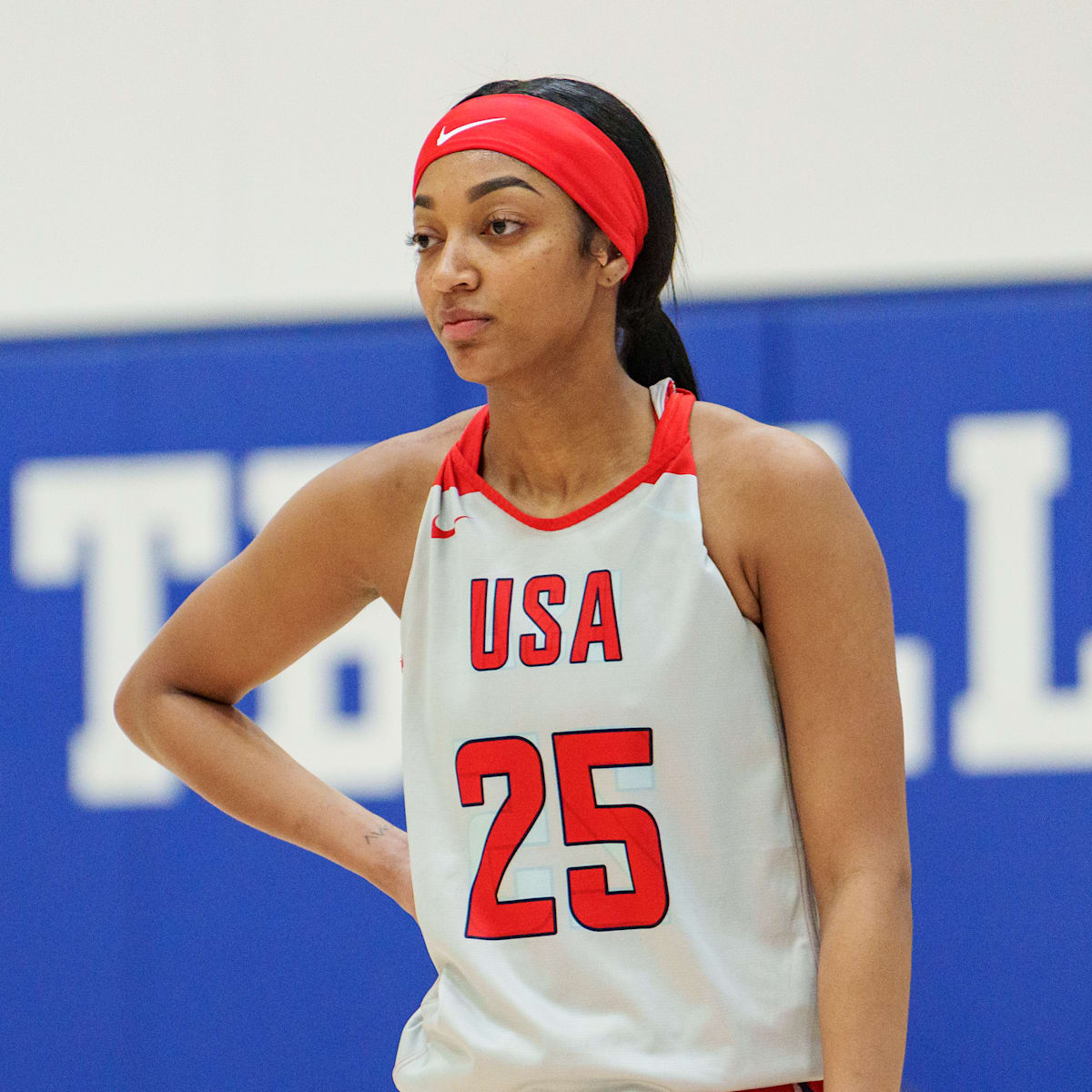
Insiders suggest that the weeks following the camp were marked by reflection and uncertainty. Doors, once open by default, now required negotiation. National team opportunities, especially at this level, are finite. Coaches remember not just performance, but responses to adversity.
The question lingering over Reese’s future is not about talent—few doubt her ability—but about adaptability. Can she redefine her game within a system that no longer revolves around her? Can intensity coexist with acceptance of a secondary role? These are questions that elite athletes must answer repeatedly as careers evolve.
Meanwhile, Clark’s position appears increasingly secure. The keys to the offense are now hers, not because they were handed to her, but because no one else could hold them as effectively. Trust, once earned at this level, compounds quickly.
The rivalry that once fueled headlines has shifted into a more asymmetrical phase. It is no longer about individual matchups, but about trajectory. One player is being woven deeper into the fabric of the program; the other stands at a crossroads, forced to choose between adaptation and resistance.
What makes this episode resonate is not the drama itself, but what it reveals about modern sports culture. In an era where branding, narratives, and personal identity are intertwined with performance, role changes feel existential. Being benched is no longer just tactical—it is symbolic.
The walk-out crystallized that reality.
It demonstrated how quickly momentum can swing, how fragile status can be, and how unforgiving elite systems are to those who cannot bend. It also exposed the emotional cost of transition—of realizing that the game has evolved, and you must evolve with it or risk being left behind.
As Team USA moves forward, the camp in North Carolina will likely be remembered not for its drills or exhibitions, but for the moment when direction became destiny. The choice to continue, uninterrupted, sent a message louder than any press release.
The program moves on.
For Angel Reese, the path forward remains unwritten, but undeniably altered. For Caitlin Clark, the moment marked the quiet coronation of a leader whose influence now extends beyond scoring and into the architecture of the team itself.
The rivalry endures, but the balance has shifted. And in elite basketball, shifts like this rarely reverse themselves without consequence.