A CONTROVERSIAL BLAST: HEALTH ACCUSATIONS FLY AS OBAMA AND TRUMP TRADE BARBS — A WAR OF WORDS ERUPTS ON C-SPAN-002
Washington, D.C. was once again consumed by political turbulence after a fresh round of explosive claims and counterclaims thrust the personal health of President Donald Trump into the national spotlight—triggering a media frenzy, partisan outrage, and a fierce exchange that many say marks a new low in modern political discourse.
At the center of the controversy are remarks attributed to former President Barack Obama, which political media outlets and commentators quickly interpreted as suggesting that Trump’s physical and mental health may be deteriorating. Though no medical records, diagnoses, or physician statements accompanied the claims, their mere circulation was enough to ignite an immediate and ferocious backlash.
Trump allies denounced the remarks as irresponsible, unethical, and deeply inflammatory—accusing Obama and his supporters of weaponizing personal health as a political tool.
“This is not concern—it’s character assassination,” one senior Republican strategist said.
“They are trying to plant doubt where there is no evidence.”
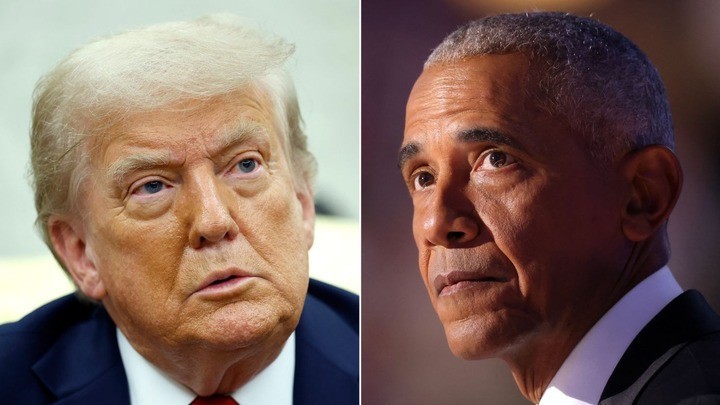
According to reports circulating in political media, former President Barack Obama was cited as suggesting that Trump’s health was in serious decline — a claim that immediately triggered intense backlash and scrutiny. The comments, which were not accompanied by medical documentation, were widely criticized by Trump allies as reckless and inflammatory.
Trump responded swiftly and publicly, dismissing the allegations as absurd and politically motivated. In a heated counterattack, he ridiculed the claims and insisted he remains in strong physical condition, framing the controversy as yet another attempt to undermine him through personal attacks rather than policy debate.
The exchange, broadcast and discussed extensively on C-SPAN and across social media, ignited fierce reactions from both sides of the political spectrum. Supporters of Trump accused Obama and Democrats of crossing a line by speculating about personal health, while critics argued Trump’s response only added fuel to an already volatile situation.
Political analysts say the confrontation highlights how far modern political discourse has shifted toward personal narratives and spectacle. “Health has become a symbolic battlefield,” one Washington observer noted. “It’s no longer just about fitness or age — it’s about credibility, strength, and leadership in the public eye.”
Within hours, clips of the exchange went viral, sparking memes, debates, and heated panel discussions. Some commentators warned that such rhetoric risks lowering the bar of political dialogue even further, while others argued it reflects the raw emotions driving today’s deeply polarized electorate.
As the dust settles, the incident underscores a broader reality: in an era of nonstop media and instant reaction, even unverified claims can explode into national controversies overnight.
And as accusations, mockery, and counterattacks continue to dominate the airwaves, one thing is clear — America’s political battles are no longer confined to policy. They are fought through words, images, and moments designed to shock, provoke, and command attention.